Norman, Oklahoma
Trimming that keeps trees standing.
Good pruning is quiet work: the right limbs off, the wounds small, and the tree stronger against the next ice load.
Prune in the quiet months
December through February is the best window for most trimming in Norman, and not just because our schedule opens up. Dormant trees show their structure — every crossing limb, cracked fork, and dead branch is visible with the leaves down. Cuts made in winter close ahead of the spring push. And the work you do in the quiet season is exactly what decides how a tree behaves when ice arrives the next fall.
Spring and fall we spend on storm cleanup and urgent clearance. Winter is when trees get better instead of just less broken.
Crown work, not topping
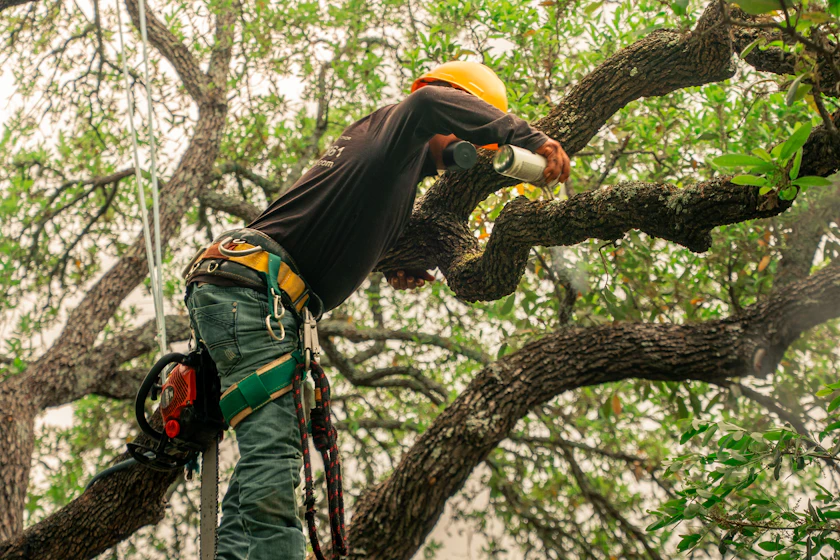
Real trimming has names: crown cleaning takes out the dead, broken, and rubbing wood. Crown raising lifts the low limbs off your roof, driveway, and sightlines. Crown reduction shortens over-extended limbs back to strong laterals, so the cut ends keep a living leader. Thinning — used sparingly — lets wind through instead of letting it push.
What we will not do is top a tree: shearing the crown off at some arbitrary height. Topping starves the tree, invites decay into the stubs, and forces a flush of fast, weakly attached shoots — the exact wood that fails first under Oklahoma ice. The arborists’ association explains it well at treesaregood.org. If a tree is truly too big for its spot, honest removal beats slow mutilation.
Roofline, driveway, and sightline cuts
Most trimming calls in town are clearance: limbs scrubbing shingles and gutters, branches hanging low over a driveway where the trash truck runs, a corner-lot hedge of limbs blocking the view of oncoming traffic. Those are quick, satisfying jobs, and we price them as such.
One boundary we hold: anything tangled in a power line, including the drop to your own meter, is the utility’s work first. Report it to your electric provider before anyone puts a saw near it. We work clear of energized lines, and you should too.
Norman species, Norman habits
Pecans want steady, moderate pruning — OSU Extension publishes solid homeowner guidance on them, and we follow it. Post oaks on the sandy east side resent big wounds and heavy thinning; the right trim on a post oak is a light one. Bradford pears carry tight, bark-included forks that split under load — structural thinning before the ice season is the only trimming that really helps them. Silver maples respond well to weight reduction over targets: take the leverage off the long limbs and the whole tree stops threatening the roof.
Trimming questions
How often should trees be trimmed?
Most mature shade trees want attention every few years. Fast growers over structures — silver maple, Siberian elm — run on a shorter clock.
Can you trim in summer?
Deadwood and clearance, yes, any time. For oaks we prefer the dormant season — fresh spring wounds on oaks invite trouble here just as they do across the southern plains.
Can you just make it shorter?
Proper reduction, yes. Topping, no — see above. If shorter-by-half is the requirement, the honest conversation is about removal.
Does trimming help before an ice storm?
More than anything else you can buy. The ice storm guide covers what fails and why.
Book the quiet-season trim.
Winter slots go first. Get on the list before the ice does the pruning for you.