Moore, Oklahoma
Tree work that fits Moore’s lots.
Removal, trimming, storm response, and stump grinding, a short run up I-35 from our home ground in Norman.
A young canopy with old problems
Moore’s trees tell the city’s story. The tornadoes of May 1999 and May 2013 erased whole neighborhoods of mature shade, and the rebuilt streets were replanted fast — Bradford pears, silver maples, whatever established quickly around new slabs and new fences. Those trees are no longer small. They have reached the size where their habits matter: pears splitting at their tight forks, silver maples stretching brittle limbs over roofs that are themselves newer than the mortgage.
That makes Moore a trimming town as much as a removal town. Structural pruning now — while the trees are middle-aged and the flaws are small — is cheap. The same flaws at full size are what our storm page exists for.
Tight lots, careful rigging
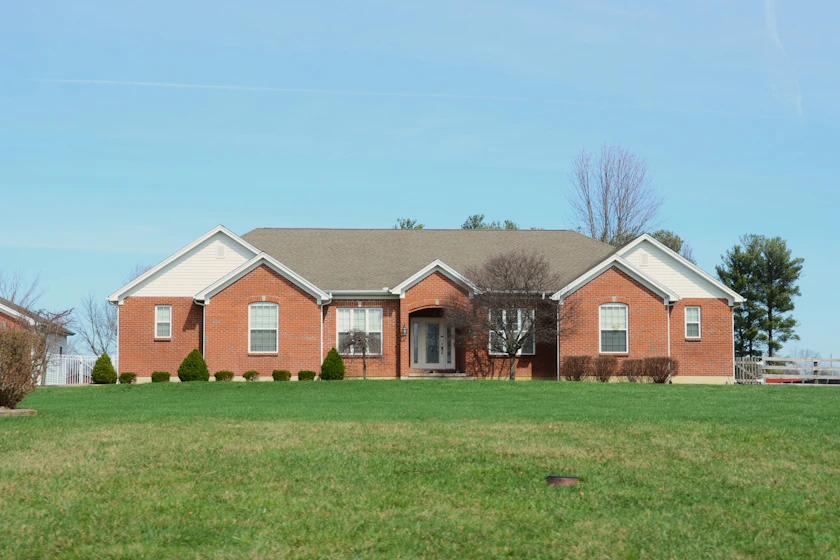
Moore lots run close: houses a driveway apart, shared fences, play sets and sheds tucked into every backyard. There is almost never room to fell a tree whole, so almost everything comes down in pieces — climbed or bucketed, roped, and lowered into the one clear patch of lawn. It is slower than open-country work and it is the right way to do it here. Chipping happens at the curb, the trailer takes the trunk wood, and the fence you share with your neighbor stays exactly as it was.
Stumps ride along on the same visit whenever you want them gone — grinding is at its cheapest when the crew is already in the yard. On Moore’s smaller lots a leftover stump is not a lawn ornament, it is the spot the mower hits every single week, and the narrow machines fit through a standard privacy-fence gate to get to it.
One Moore-specific habit worth flagging: when a Bradford pear splits — and they split here every ice season — the temptation is to cut the broken half off and keep the rest. A pear that has lost half its crown is standing on the same weak forks that just failed. We will tell you honestly whether yours is a trim or a goodbye.
Storm runs up I-35
When storms cross the metro — and the November 2024 tornadoes were only the latest — we run triage north out of Norman, worst-first. Moore is minutes up the interstate, and the rules there are the rules everywhere: utility first for anything near a line, photos before cleanup for your adjuster, and a number said out loud before the saw starts. Emergency work can run to $5,000 at the worst; most calls cost far less, and a typical calm-weather removal averages about $750.
Start with the quote form or a call, and tell us the cross streets — Moore addresses off the main section-line roads can fool a GPS.
Moore, we’re close.
One call from a Moore address gets the same crew and the same straight number as home ground.